 Protein Ring
Start with the kitchen you have.
A long list of recipes is not much help when you need food now. First decide whether you can keep food cold. Then pick one option you like and can buy.
You have a fridge
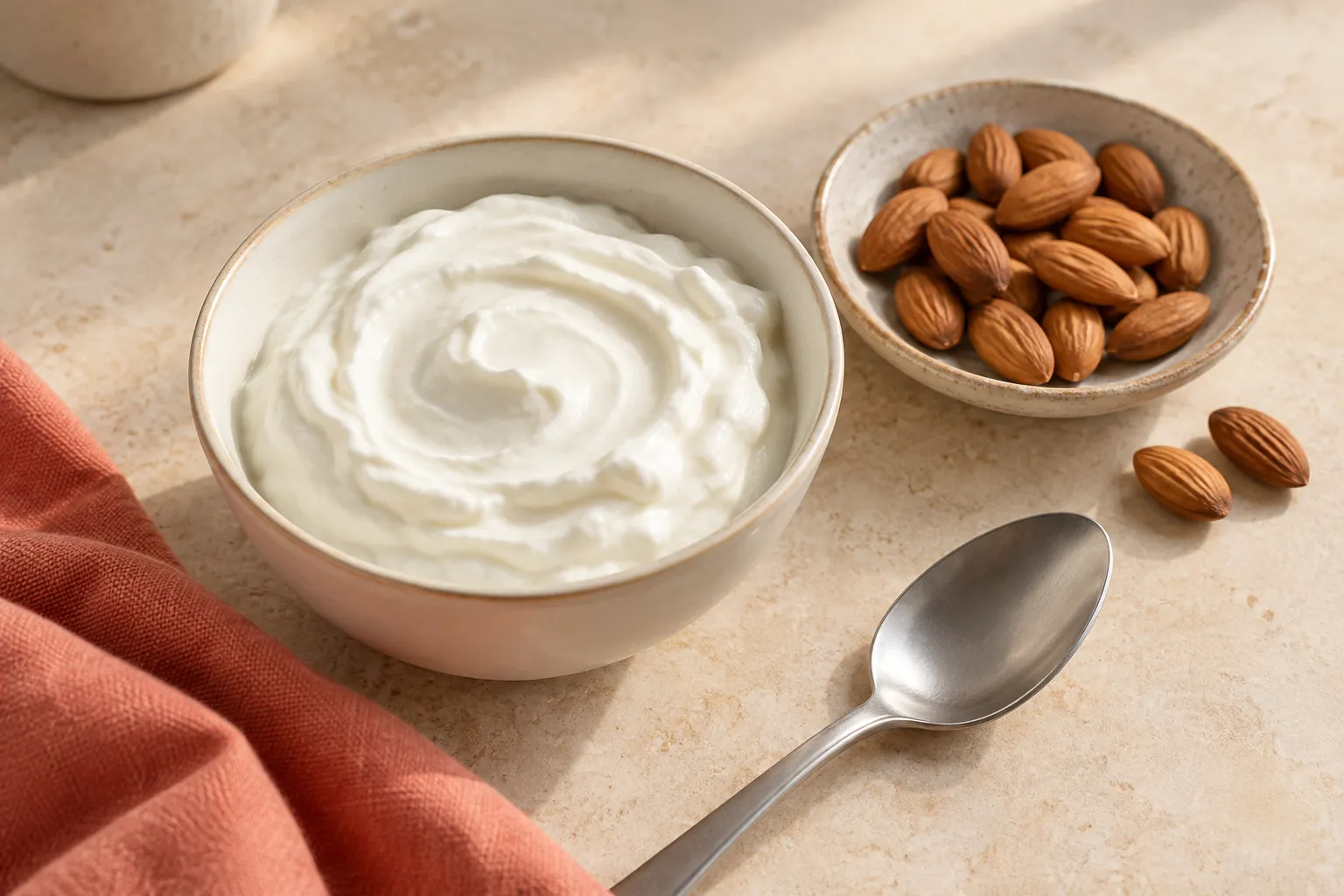
A yogurt pot and something crunchy.
Keep the yogurt cold until you eat it. A single pot gives you a clear portion without needing to scoop from a large tub.
You need a cupboard option
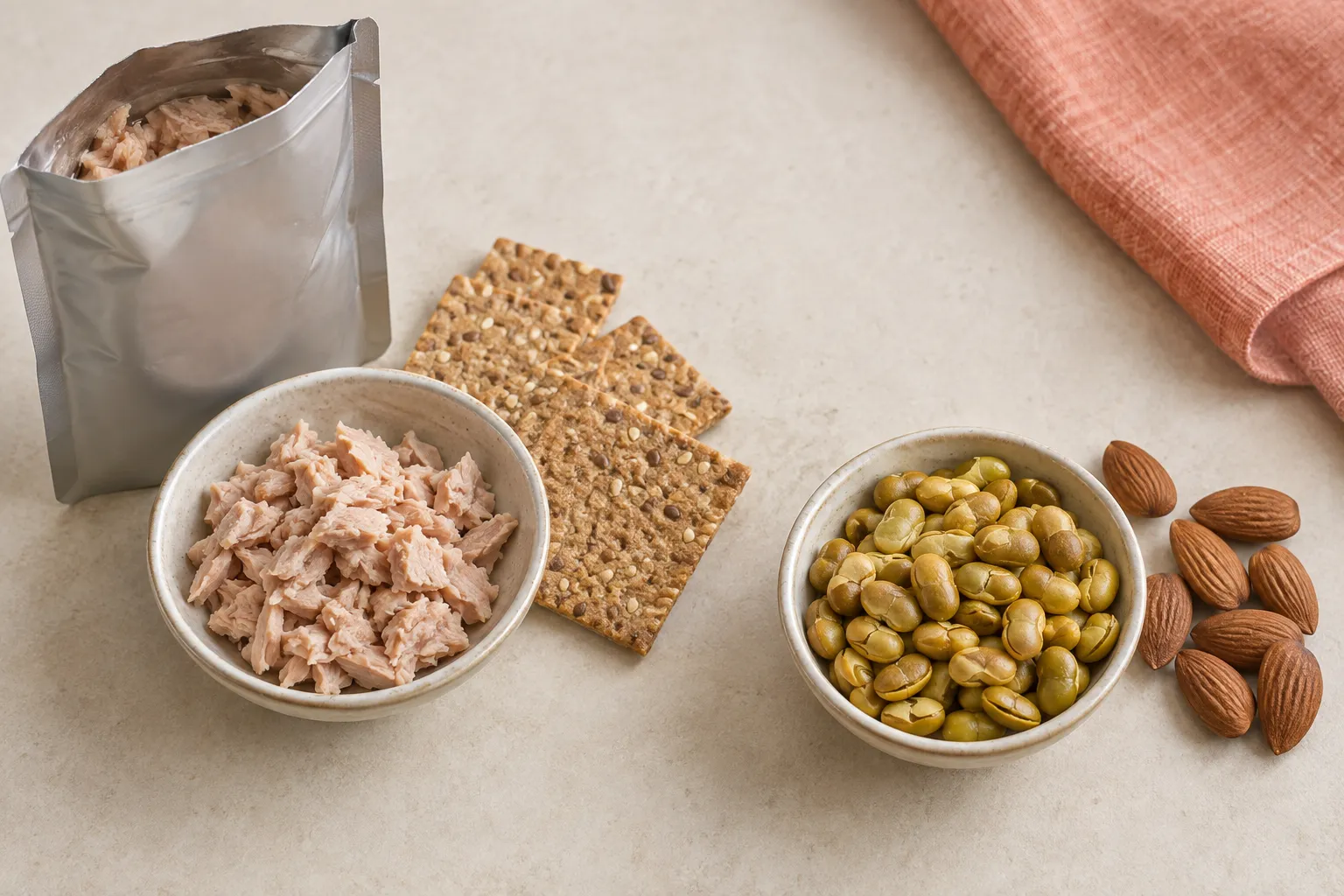
Roasted beans, nuts, or a sealed tuna pouch.
Choose ready-to-eat products and follow their storage labels. Open tuna when you plan to eat it; leftovers need refrigeration.
You do not need these exact brands. They make the examples checkable. The numbers below come from US product labels; a different pack, flavor or country can mean different amounts.
Three snacks. All the maths shown.
These are snack ideas, not a daily meal plan or a protein target. Pick a portion that suits you. Add other foods if you want more to eat; the totals shown count only the named ingredients.
1 / From the fridge
Greek yogurt + almonds
22gprotein in this example
- Plain Greek yogurt · 1 pot (150 g)FAGE Total 0%, 5.3 oz pot · Label source16g
- Almonds · 28 gBlue Diamond Whole Natural · Label source6g
16 g + 6 g = 22g
Open the yogurt and eat the almonds alongside it, or sprinkle them on top. A spoon is the only utensil you need.
Contains milk and almonds. A different yogurt pot can have a different serving size and protein amount.
2 / Open when you are ready
Tuna + whole-grain crackers
20gprotein in this example
- Ready-to-eat light tuna · 1 pouch (74 g / 2.6 oz)StarKist Light Tuna in Water pouch · Label source17g
- Whole-grain crackers · 6 crackers (28 g)Triscuit Original · Label source3g
17 g + 3 g = 20g
Open the no-drain tuna pouch and spoon it onto the crackers. Choose the ready-to-eat pouch named here; other packs may need draining or preparation.
Contains fish and wheat. Unopened shelf-stable packaging does not make leftover tuna safe at room temperature.
3 / A plant-based cupboard option
Roasted edamame + almonds
19gprotein in this example
- Dry-roasted edamame · 30 gNuts.com Dry Roasted Edamame (Salted) · Label source13g
- Almonds · 28 gBlue Diamond Whole Natural · Label source6g
13 g + 6 g = 19g
Put the ready-to-eat roasted edamame and almonds in a small bowl, or eat them alongside each other. No thawing or cooking is needed.
Contains soy and almonds. Check the pack for other allergy warnings; the edamame source also lists possible milk, sesame, peanut and tree-nut contact.
If you are pregnant, might become pregnant, are breastfeeding, or are choosing fish for a child, use the FDA/EPA guidance to choose the type and frequency. These examples do not set a fish-eating schedule.FDA/EPA advice about eating fish.
A pot is not always a serving.
The yogurt example uses a 150 g pot with 16 g of protein. The same brand also lists a 170 g serving from a larger tub with 18 g. Both can be correct: they describe different amounts.Check FAGE’s portions.
Keep the food name, portion and label together. If you swap products, replace the number too. Do not assume that a flavored yogurt, another cracker, or a larger tuna pouch has the same total.
For example, if your own yogurt label says 10 g of protein per 100 g, a 150 g pot contains 15 g: 10 × 150 ÷ 100 = 15. That is an arithmetic example, not another product measurement.
The snack-label guide explains serving sizes. The printable serving cheat sheet covers label arithmetic using chips, a bar and a cookie; it is a separate snack-label edition.
Keep “ready to eat” ready to eat.
- Check the format. Dry-roasted edamame is a finished snack. Frozen edamame or dried soybeans may require cooking; follow the pack rather than treating them as a direct swap.
- Keep cold foods cold. Store yogurt and perishable leftovers at 40°F / 4°C or below. If you take them out, use an insulated bag with enough ice packs to keep them cold.
- Watch time out of the fridge. FDA guidance limits perishable food at room temperature to two hours, or one hour above 90°F / 32°C. Discard food that exceeds those limits; follow stricter pack instructions.
- Read allergy information. These examples include milk, fish, wheat, soy and almonds. Check ingredients and cross-contact warnings before choosing a substitute.
FDA: guidance on storing food safely
Choose more than a protein number. Taste, price, appetite and the rest of the label matter too. Keep one or two options you actually enjoy so an easy snack is there when you need it.
From a snack to your day
Keep the portion with the food.
In Protein Ring, describe what you ate and include the amount—for example, “a 150 g plain Greek yogurt and 28 g almonds.” Review the estimate and correct it against your pack when needed. Then see how much protein is left for today.
See how meal tracking worksSources and portion notes
Checked September 16, 2026. Protein amounts are the brands’ declared label values, not laboratory measurements by Protein Ring. Totals add those rounded values. Your current pack is the source to use when it differs.
- FAGE Total 0%, 5.3 oz pot: 1 pot (150 g) · 16g protein
- Blue Diamond Whole Natural: 28 g · 6g protein
- StarKist Light Tuna in Water pouch: 1 pouch (74 g / 2.6 oz) · 17g protein
- Triscuit Original: 6 crackers (28 g) · 3g protein
- Nuts.com Dry Roasted Edamame (Salted): 30 g · 13g protein
The Nuts.com page has a conflicting protein figure in its promotional text. This guide uses its Nutrition Facts panel: 13 g per 30 g. Check the packet before using the example.
Protein totals add the amounts on the named product labels. Check your pack for current portions, ingredients and storage directions.